
Cleanouts
Estate Cleanout Checklist for a Brockton Two-Family
The order that works when a Brockton two-family or three-decker has to be emptied on a probate or closing deadline: secure the papers first, value before you dispose, and why the container comes last.
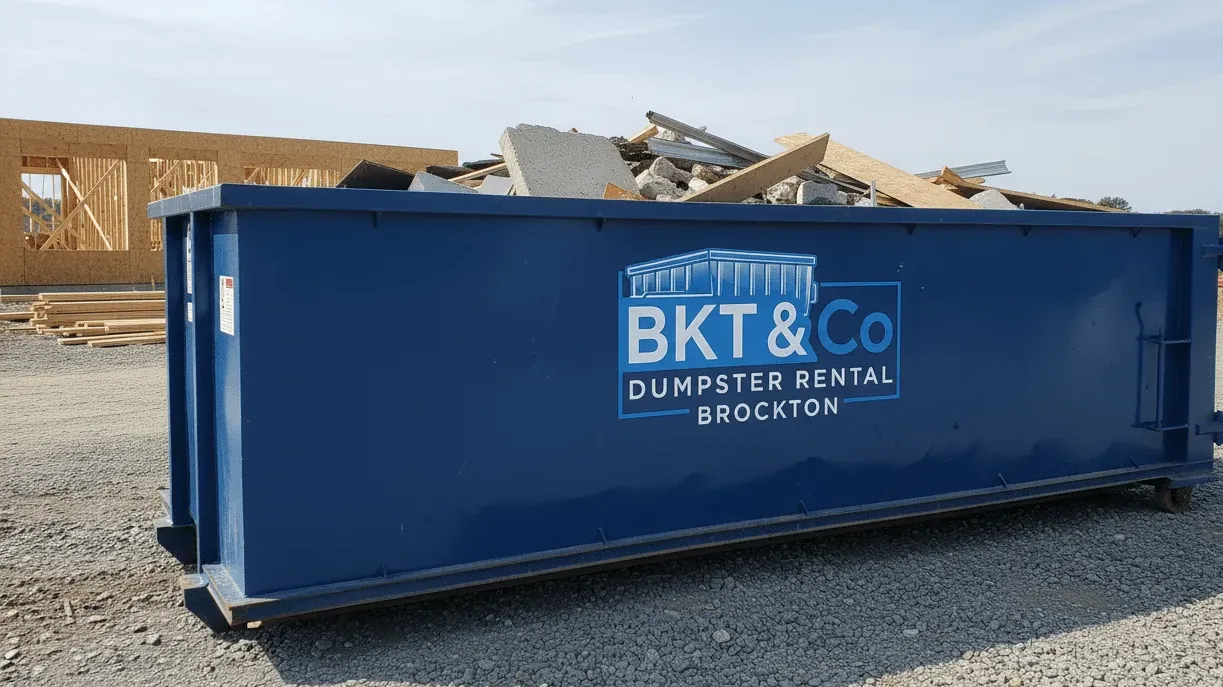
An estate cleanout is not a junk job with a sad backstory. It is the emptying of a house somebody lived in for forty or fifty years, done by people who are grieving, against a date somebody else set — a probate schedule, a closing, a listing. So this page is about order rather than speed, and the container turns up late on purpose.
Nothing here is legal advice. Anything touching title or the estate's obligations goes to the executor or the estate's attorney.
The Brockton house it usually is
Two shapes cover most of this work. The first is a two-and-a-half storey, gable-roofed sidehall-plan two-family built between 1870 and 1915, the standard working-class house of the shoe years. The second is a three-decker, concentrated in Montello and along Main Street south toward Campello, and worth dating correctly: three-deckers arrived here after 1895.
Both come with a full basement and an attic, and the reason is code rather than taste. The Massachusetts frost line is 48 inches, so a footing goes down four feet anyway; once the hole is dug, walls and a floor cost little more. The basement was nearly free, so it got built, and then it got filled.
Expect volume out of proportion to the room count. Brockton is 57.4% owner-occupied at 2.88 persons per household, with 33.7% of residents foreign-born. Families here hold houses for generations and often occupy more than one unit, so a two-family regularly carries more than one household's worth of belongings.
The order, which matters more than the speed
- Secure the documents and photographs before anything moves at all.
- Let the family take what they want, with a written deadline.
- Appraise and sell before a single thing is thrown.
- Donate what is usable, pickups booked ahead.
- Sort the banned materials out of the pile.
- Then the container, for what is genuinely left.
The common mistake is ordering the box in week one because it feels like progress. It puts a clock on decisions nobody is ready to make, and once a load is on the truck it is gone.
Documents and photographs first
Pick one room, put one box in it, and let nothing out of it: the will, the deeds, insurance policies, tax records, titles and bank statements, which are how families find the storage unit nobody mentioned. Photographs, negatives and home video are what families most regret losing, and in a house this old they are never in one place. Run a shred pile as its own category: a container on a shared driveway is not a secure document store.
Selections, then valuation
Set the rule in advance, set an end date, and write down what left and who took it; open-ended selection stalls an estate for months. Then get an appraiser or estate-sale company through before anything is thrown — usually the highest-return hour of the week.
What is genuinely worth money in this stock
Pull these before the container arrives, because once a box is on the driveway everything near it becomes a candidate for it.
- Period hardware — mortise locks, cast escutcheons, brass hinges, pushbutton plates.
- Newel posts and stair parts, often the best joinery in a sidehall house.
- Mantels, including ones boarded over when a fireplace was closed.
- Solid doors, five-panel and four-panel, with their original hardware.
- Clawfoot tubs and pedestal sinks.
- Cast iron radiators, copper pipe and scrap metal. Metal is a banned material anyway, so it comes out of the load regardless. You may as well be paid for it.
- Old hand tools and machinist tools.
- Anything shoe-industry related — lasts, patterns, cutting dies, benches, factory signage. These houses were built by people who worked in those factories, and collectors care about it.
Room by room
The basement
The largest single job in the house. Expect the oil tank and burner, often with the dead one still beside the new; the workbench built into the joists; paint and solvents from three sets of owners with the labels gone; storm windows stuck together on edge; the chest freezer; and canning jars by the case. Our basement and attic guide covers that floor on its own.
The attic
Boxes, trunks, furniture carried up and never carried down. Before shifting anything, look at what the attic is made of. Vermiculite insulation is a stop-and-check item, loose fill of any age wants identifying before it is disturbed, and knob-and-tube wiring in the joist bays means an electrician first. The floor is usually loose boards over joists; take a headlamp and take somebody with you.
The rest of the building
- Each floor of the two- or three-family separately. Treat every unit as its own house, because it was one.
- The back hall and back stairs, where bicycles and tenant leftovers accumulate for decades.
- The front and back porches, including what is stored underneath them.
- The shed and the garage — mower, fuel cans, leftover building materials.
The constraint that makes a Massachusetts estate cleanout different
Mattresses and textiles have been banned from disposal in Massachusetts since 1 November 2022. MassDEP's enforcement standard is plain: there is no acceptable amount of mattresses. One in a disposal load is a violation, not a rounding error.
Now consider what this job produces. Four mattresses from four bedrooms, and forty years of clothing out of every closet. An estate cleanout is exactly the job that trips both bans at once. Textiles are the sleeper: nobody thinks of a closet as a regulated waste stream, and a whole-house clear generates more of it by volume than almost anything else.
There is a carve-out. Both bans exclude items contaminated with mold, bodily fluids, insects, oil or hazardous substances, and MassDEP publishes a Contaminated Mattress Certification Form, recommended rather than mandatory. In a house that sat closed through a damp spring that is relevant, but do not assume it. Ask the facility what they will take before the load is built.
The rest of the ban list an estate will hit
| Material | Where it shows up |
|---|---|
| Appliances and white goods | Range, washer, dryer, freezer |
| Ferrous and non-ferrous metal | Radiators, pipe, bed frames |
| Cardboard and paper | Decades of stored boxes and files |
| Glass, metal, plastic containers | Canning jars, pantry shelves |
| CRTs, TVs and monitors | The console TV, the old computer |
| Lead-acid batteries and tires | Garage, shed, behind the garage |
| Yard waste and leaves | Whatever the yard has done since |
| Clean gypsum wallboard, ABC rubble | Repair work, old walk, the pile out back |
Our Massachusetts waste ban guide has the full table and the dates, and the MassDEP waste ban pages are the primary source.
Why we ask what is in the house before we quote
Because in Massachusetts both the generator and the hauler are liable. MassDEP is explicit that people who generate solid waste and people who transport it are both subject to the ban requirements. Facilities run random load inspections every month, and a failed load means letters to both the hauler and the generator within 45 days. So when Brendan asks how many mattresses are in the house, that is not intrusiveness. It is what keeps a family from getting a letter from the state six weeks after the house closed.
The Brockton routes for what cannot ride in the box
The Brockton Recycle Depot, 300 Oak Hill Way, is open Monday to Saturday, 8:30am to 3:00pm, residents-only with proof of residence. It takes textiles, tires, batteries, lamps, TVs, monitors and CRTs, propane, appliances and waste oil, and paint and household chemicals 1 April to 31 October only, non-residents paying $8 per gallon. There is also a free Paint Swap Shed. PaintCare does not operate in Massachusetts, so ignore any guide pointing you at a hardware store.
For bulky items the City allows one free item a week, then $20 prepaid each for a mattress, a couch or a TV. Run that against a four-bedroom two-family and the gap is obvious.
⚠ One caution that catches executors. An executor clearing a house they do not themselves live in may not qualify for resident pricing, even holding the keys and the deed, and the same question hangs over the bulk-item programme. Call the DPW Refuse Division on 508-580-7827 first rather than making a wasted trip. The City of Brockton pages carry the details.
What the City will not take at all
The City does not collect construction debris and does not collect doors. In its own published words, for property cleanouts, automotive parts, bathtubs, kitchen cabinets, pipes, sheetrock, tree stumps, rocks, soil and asphalt, residents must hire private haulers. That list is the estate cleanout in miniature, named by the City itself.
The oil tank
In a pre-war Brockton basement there is frequently a heating oil tank, sometimes an abandoned one buried in the yard. We do not take tanks in a container. Removal runs through Brockton Fire's FP-292 Tank Removal Permit — published inspection fees $55 residential aboveground, $100 residential underground, Fire Prevention 508-583-2933. Use a licensed contractor and let them pull the permit.
If oil has gone into the ground or onto the basement floor, reporting rules apply and they are fast. MassDEP requires notification for a spill over 10 gallons within 24 hours, any sheen on surface water, oil on the groundwater table, or explosive vapours in a building — possibly within 2 hours. The controlling rule is the Massachusetts Contingency Plan, 310 CMR 40.0300, under M.G.L. c.21E. First call the fire department, not the insurer; many policies carry a pollution exclusion.
This matters on a sale. A buyer's inspection will find a tank, and a release found during diligence stops a closing far more expensively than dealing with it in week two.
Asbestos and lead
Where asbestos-containing material is suspected, 310 CMR 7.15 requires a survey by a licensed inspector before demolition or renovation. In a pre-1980 basement the classic find is pipe insulation, the white wrap on heating lines, crumbling where somebody caught it with a ladder. We cannot take ACM in any container, ever.
On lead, the Massachusetts Lead Law runs through CLPPP, (800) 532-9571, and sits on top of the federal RRP rule rather than instead of it. Pre-1978 housing is the trigger, which in this stock means essentially every house on this page. It becomes a live obligation when the property will be sold or rented to a family with a child under six — for an estate, the ordinary case rather than the exception.
Sizing, permits and setting the box
A full two-family with basement and attic emptied is usually a 30 yard, or a 20 yard with a swap when the family is working weekend by weekend. The size comparison has the dimensions. Swaps beat one oversized box: an estate gets sorted at the pace grief allows, and two 20s a fortnight apart let the family stop and start.
The constraint on these lots is almost always the narrow shared driveway. It runs down one side between two buildings, the container has to fit, the truck has to swing, and the tenants upstairs still need their car out. Tell us which side it is on.
Two placement rules apply here that do not apply in most of the country. Under 527 CMR 1.00, a container over 6 cubic yards left overnight requires a fire chief permit, and every roll-off exceeds six yards. Massachusetts also enforces 10 feet from combustible walls, not the five feet national guides quote. Call Brockton Fire Prevention on 508-583-2933 about your address.
Boards go under every container. If the lifting is the problem rather than the box, junk removal is where we do the carrying. The estate cleanout page covers a closing date, residential dumpster rental covers a house going on the market, and the home cleanout checklist is the general version.
If you are working to a date you did not choose
BKT & Co has hauled out of 1109 Montello Street since 2011, and Brendan Teixeira still answers the phone. Tell us the deadline and what is in the house, mattresses and closets included, and we will work backwards from your date. Call (508) 436-2303 or the contact page.
Questions this guide did not answer? Call (508) 436-2303. We would rather spend two minutes on the phone than have you order the wrong container.